Dental Implants Bakersfield/ Same-Day Dental Implants in Bakersfield, CA
Implant placed and a temporary crown fitted in one appointment, so you are not carrying a gap for months. Whether your site qualifies comes down to a torque reading taken during surgery, and this page explains exactly what that means for you.
Consultations
(310) 929-9128Monday to Friday, 7:00 AM to 4:00 PM
English, Spanish and Farsi
Second opinions on existing treatment plans are welcome. Bring the plan, the itemised quote and any imaging you already have.
 ADA
American Dental Association
ADA
American Dental Association
 Calaoms
California Association Of Oral and Maxillofacial Surgeons
Calaoms
California Association Of Oral and Maxillofacial Surgeons
 ABOMS
American Board of Oral and Maxillofacial Surgery
ABOMS
American Board of Oral and Maxillofacial Surgery
 AAOMS
American Association of Oral and Maxillofacial Surgeons
AAOMS
American Association of Oral and Maxillofacial Surgeons
 Board-Certified ABOMS
Board-Certified Oral & Maxillofacial Surgeon
Board-Certified ABOMS
Board-Certified Oral & Maxillofacial Surgeon
The treatment
Immediate placement means the implant goes into the socket at the same visit the tooth comes out, instead of waiting months for the socket to close. Immediate loading means a crown is attached to that implant the moment it is placed.
They are separate decisions. You can have placement without loading, and loading at a site that healed years ago. Advertising blends them, which is why patients arrive expecting one and are quoted the other.
Same-day, done properly, is usually both: extract, place, graft, and fit a provisional crown in one appointment. What you leave with is a temporary. The definitive crown is made after the bone has fused to the implant, which still takes three to six months. Immediate loading deletes the visible gap, not the biology.
Primary stability: how tightly the implant grips at the instant it is seated. It is read as insertion torque in newton centimetres, and a figure around 35 Ncm is the common threshold before a surgeon will hang a crown on it the same day. That number does not exist until the implant is in the bone, so nobody can promise you same-day before surgery. They can only tell you how likely it looks.
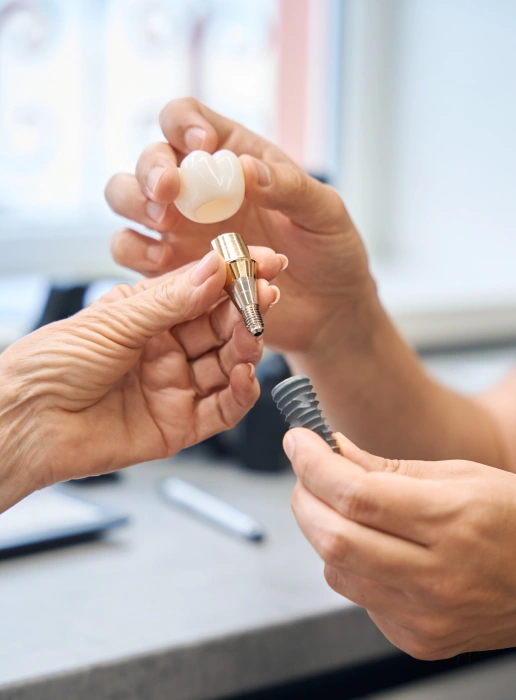
What the decision rests on
An implant carrying a crown from day one is loaded while bone is still knitting onto its surface. Above a certain amount of micromovement the body lays down soft fibrous tissue instead of bone, and the implant never integrates. Everything below exists to keep movement under that threshold.
Dense cortical bone grips. Soft, sparse trabecular bone does not. Bone is graded on a four-point scale from dense through to almost hollow, and the grade varies by location: the lower front jaw is typically the densest site in the mouth, the upper back jaw the softest. The CBCT scan estimates it beforehand. The drill confirms it during.
Measured as insertion torque, with roughly 35 Ncm the usual minimum before a provisional is considered. Some surgeons cross-check with resonance frequency analysis, which reports an implant stability quotient. Both are taken with the site open, which is the reason candidacy is confirmed mid-surgery rather than at a consultation.
A provisional on a healing implant is deliberately shaped to sit clear of contact, in straight closing and in side-to-side movement. If it touches, every chew and every clench transmits load straight into bone that is trying to fuse. This is also why untreated grinding pushes a case toward staging.
A round implant in an oval socket leaves a gap, sometimes called the jumping distance. Beyond roughly two millimetres it is grafted, because that space otherwise fills with soft tissue and the ridge collapses inward where you can see it. Separately, a same-day provisional should be screw-retained rather than cemented, so it can be lifted off for review without stressing the implant and without cement left in a healing site.
Interactive
Six questions covering the factors that actually move the decision. Under a minute, and it produces a realistic expectation rather than a promise.
Your result carries through to the consultation form on the home page, so the team can open the call already knowing your situation instead of starting from scratch.
None of this substitutes for the torque reading. What a self-check can do is flag the things that reliably push a case toward staging, so you arrive with the right expectation and the right questions.
Six questions. Your outcome is carried over to the consultation form on the home page.
Likely candidate
What remains is bone density at the site and the torque reading at surgery. Both need a CBCT scan and the site open, so the consultation is the next real step rather than more research.
Needs assessment
Infection is treated. Grinding is protected with a night guard. Thin bone is grafted. Any of those may move you to a staged sequence, which reaches the same finished tooth by a longer route.
Likely staged
Your answers include factors that meaningfully raise the chance an immediately loaded implant fails to integrate. Implants are still very much on the table. The site gets prepared and grafted first, then restored once it is ready.
Interactive / the appointment
Step through the surgical day. Stage five is the decision point: with the site open and a torque figure in hand, the plan either proceeds to a crown today or switches to a healing cap and a staged restoration.
| Factor | Clears same day | Points to staged |
|---|---|---|
| Bone grade | Dense cortical | Soft, sparse |
| Insertion torque | Around 35 Ncm or above | Below threshold |
| Socket walls | Intact, buccal plate present | Fractured or missing |
| Infection | None active | Abscess or drainage |
| Bone past the root tip | Enough to engage | Sinus or nerve close |
| Bite forces | Normal, or guarded | Untreated grinding |
| Smoking | Stopped through healing | Continuing |
A right-hand entry changes the sequence, not the destination.
Both outcomes, in advance
The honest version of same-day includes the possibility that it becomes a staged case on the table. Knowing both endings before you consent removes most of the anxiety from the appointment.
Ending A
The implant grips firmly in sound bone.
Ending B
Soft bone, a fractured socket wall, or infection found on inspection.
Ask any office how the fee is handled if this happens. Your estimate here states it in writing before you book.
Position changes everything
Same-day is most often requested for a visible front tooth, for obvious reasons. It is also the harder of the two, and for a reason that has nothing to do with the implant.
At the front, what people notice is the gum, not the crown. The thin plate of bone on the lip side of an upper front tooth is often only a millimetre or so thick, and it is the scaffold holding the gum line and the small triangles of tissue between the teeth. Lose it and the crown can be flawless while the gum sits visibly higher than its neighbour.
That is why front-tooth cases justify grafting the gap even when it is small, why the provisional is shaped to support the tissue rather than just fill the hole, and why thin gum tissue sometimes points toward a zirconia implant, since a titanium collar can cast a grey shadow through translucent gum.
At the back the priorities invert. Nobody sees it. What matters is chewing load, root spread in the socket, and how close the sinus above or the nerve below sits to where the implant needs to go.
Zirconia option for thin gum tissue| Front tooth | Back tooth | |
|---|---|---|
| Main challenge | Gum line and tissue contour | Chewing load and anatomy above or below |
| Critical structure | Thin lip-side bone plate | Sinus floor, or the nerve canal |
| Gap grafting | Almost always, even if small | When it exceeds about 2mm |
| Provisional shape | Contoured to support the gum | Simply out of bite contact |
| Material question | Zirconia if gum is thin | Titanium is usually fine |
| If it goes wrong | Visible asymmetry | Usually invisible |
Interactive / results
Cases photographed before treatment and after the definitive crown. Drag the divider, or use the slider beneath each pair.
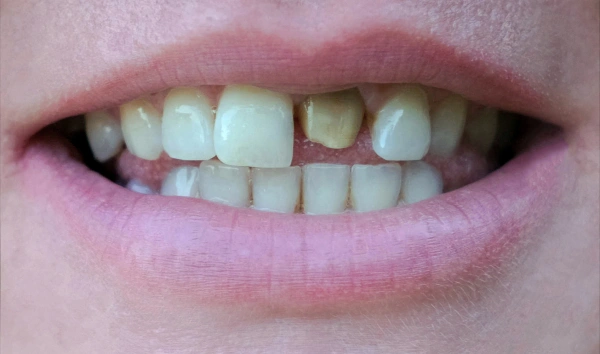
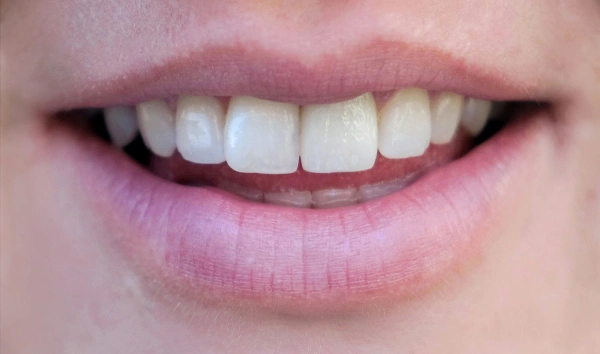
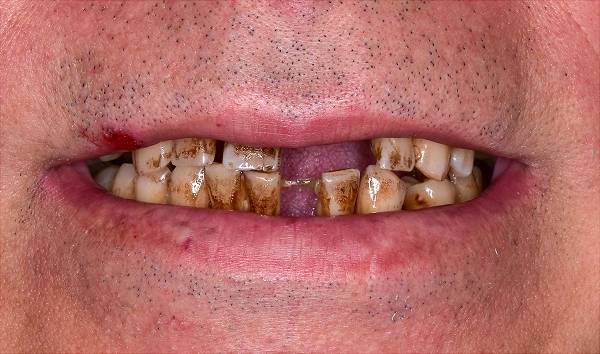
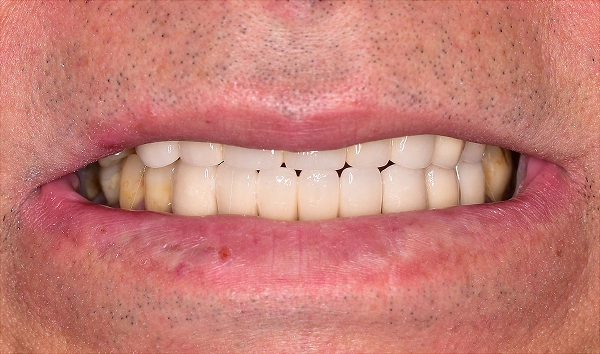
Individual results and recovery times vary. Photographs show individual cases and are not a prediction of outcome. Patient consent is obtained before any image is published.
Interactive / recovery
With a staged implant the fixture sits sealed under gum where nothing can reach it. With immediate loading there is a crown standing up in a working mouth, so protecting it is genuinely shared work. This is the part patients underestimate most.
Drag through the stages. The restrictions read as fussy written down, and they are the entire trade for having a tooth on day one.
Grinding applies overnight forces well beyond chewing, and a healing implant cannot distinguish a clenching habit from a bad diet decision. A night guard is usually built into an immediate-loading plan rather than added later, and untreated grinding is one of the more common reasons a case gets staged.
Six stops from the surgical day to the definitive crown.
Straight answer
In well selected cases, published survival rates for immediately loaded implants sit close to staged implants. The words carrying the weight are well selected. The margin for error is narrower, because a loaded implant has to stay still while it fuses.
So the variable that matters is selection, not technique. A surgeon who loads every case will have more failures than one who loads the cases that clear the threshold and stages the rest. That is the whole reason the torque reading outranks anything said at a consultation.
When failure happens it shows up early, usually in the first weeks while integration is being established, rather than years later. A failed implant is removed, the site is grafted and allowed to heal, and a replacement is placed. It costs months. It does not usually cost the tooth position permanently.
The practice
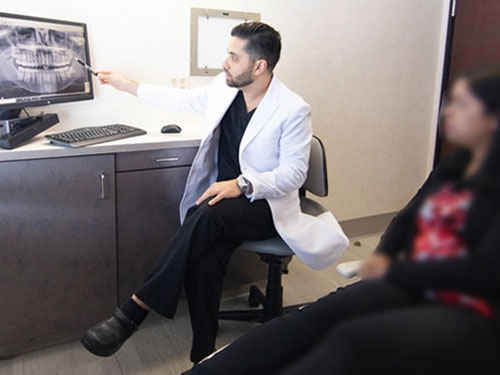
Imaging, surgery and sedation are handled in one office on South Bakersfield Drive, so a same-day case does not depend on coordinating separate providers on the day it matters.

Investment and payment
Somewhat more on the surgical day, because of the provisional and the extra chair time. Set against that, immediate placement can remove a separate extraction surgery and a separate graft healing phase, so some cases land close to level across the whole plan.
The fixture and the surgery to place it. Same core fee as a staged implant at the same site.
Removal done slowly and deliberately to keep the socket walls whole, because those walls carry the implant.
Graft material between implant and socket wall. Routine in immediate placement, and it protects the gum contour you will actually see.
The line item a staged plan does not have. Screw-retained, temporary by design, replaced later.
Made after integration. Custom abutment plus a porcelain or zirconia crown matched to your adjacent teeth.
Many plans exclude the fixture but contribute toward extraction, grafting, abutment or crown, subject to annual maximums. Financing through Proceed Finance is available, subject to approval.
Your estimate is itemised and states in writing what happens to the fee if immediate loading is abandoned mid-surgery. Worth asking any office the same question before you book.
Your surgeon
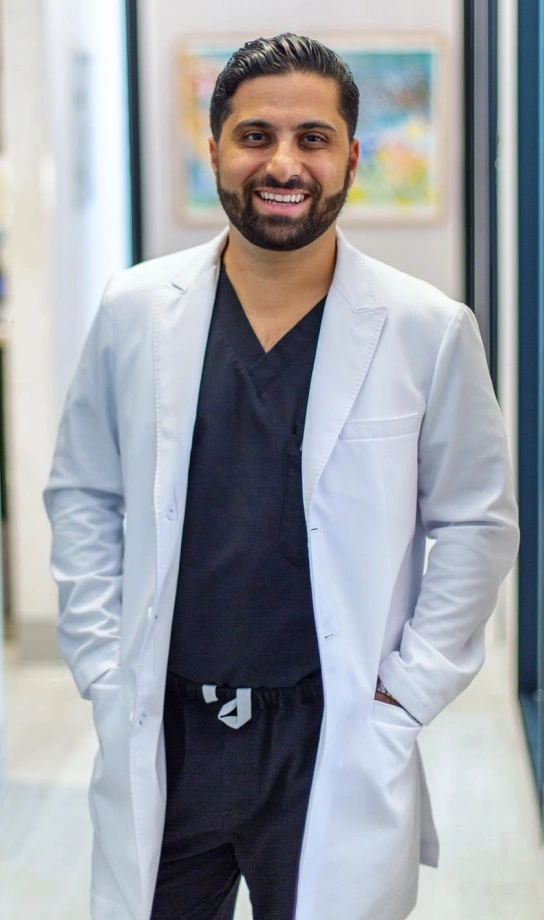
Placing an implant is mechanical. Deciding, with the site open and a torque figure in front of you, whether that implant will tolerate a crown for the next twelve weeks is judgement built on volume.
It is also the moment where commercial pressure and clinical interest can point in opposite directions. Which is the strongest argument for having the call made by someone whose training covers what to do when the answer is no.
The consultation covers a clinical exam, a CBCT scan to assess bone grade and socket anatomy, a straight answer on whether immediate loading is realistic for you, and a written itemised estimate covering both routes.
Common questions
Immediate placement means the implant goes into the socket at the visit the tooth is extracted, rather than waiting months for the socket to close. Immediate loading means a crown is attached to that implant at the moment it is placed.
They are separate decisions that often happen together. You can have placement with a healing cap and no crown, and loading at a site that healed years ago. Same-day advertising usually blends the two, which is why patients get quoted something different from what they expected.
Three things. Bone quality at the site, which the CBCT estimates and the drill confirms. Primary stability at insertion, read as torque in newton centimetres, with roughly 35 Ncm the usual minimum before a crown is fitted the same day. And whether the provisional can be shaped to sit clear of your bite.
The torque figure only exists once the implant is in bone, which is why no honest office can guarantee same-day beforehand. They can tell you how likely it looks from the scan.
No. The crown fitted on the surgical day is a provisional. It fills the space and looks acceptable, and it is deliberately built to be replaced.
It should also be screw-retained rather than cemented, so it can be lifted off for review without stressing the implant and without cement left behind in a healing site. The definitive crown is made after integration, typically at 3 to 6 months.
A healing cap goes on instead of a crown, the site is grafted as planned and closed, and the restoration is staged. If the tooth is visible you leave with a separate temporary arrangement.
The end result is the same tooth by a longer route. Ask any office how the fee is handled in that situation before you book. Your estimate here states it in writing.
In well selected cases, published survival rates sit close to staged implants. The margin for error is narrower, because a loaded implant must stay still while bone fuses to it.
Selection is what makes the difference rather than technique. Risk rises with soft bone, torque below threshold, a fractured socket wall, infection, untreated grinding, smoking and chewing too early. Failures tend to appear in the first weeks rather than years later.
Front teeth are the most common request and the more demanding case, for a reason that has little to do with the implant. The thin plate of bone on the lip side is often about a millimetre thick, and it holds up the gum line and the tissue triangles between your teeth.
So front cases justify grafting the gap even when it is small, and the provisional is contoured to support tissue rather than simply fill the hole. Where gum tissue is thin, a zirconia implant may be preferred because a titanium collar can cast a grey shadow through it.
Cool soft food for the first three days with nothing chewed on the implant side, soft food both sides through week one, then normal food on the opposite side with only light contact on the provisional for around six weeks.
Bread crusts, nuts, ice, raw carrot and tough meat are the usual culprits. Ordinary chewing resumes once the definitive crown is fitted, because that restoration is built for full function. The recovery slider on this page breaks it down stage by stage.
Somewhat more on the surgical day, because of the provisional crown and the additional chair time.
Across the whole plan the difference narrows, since immediate placement can remove a separate extraction surgery and a separate graft healing phase. You receive an itemised estimate covering both routes at the consultation.
Location
Serving: Bakersfield, Beverly Hills, Century City, Westwood, Brentwood, West Hollywood, Santa Monica, Bel Air, Sherman Oaks, Culver City and the greater West Los Angeles area.
Book a Consultation